T
rends in digital marketing are an important indicator of the direction in which the area of digital is developing, or where it is ‘moving’. Understanding the trends gives a wider picture of what is happening and allows for ongoing adjustment of online activities to make the most of the trends in your favour.
Let’s look at which trends are, at this moment, marking out and steering digital marketing.
Table of contents
- Why are we the right choice for you?
- A meeting and an exchange of wishes
- We prepare a quote
- We prepare the contract
- The signing of the contract follows
- Marketing services, always within reach
- Preparation of content and creatives
- Content for approval
- Publishing the content
- Managing posts on social media
- Maintenance
- Analytics
- And that isn’t all.
1. Changing consumer behaviour
Changes in consumer digital behaviour bring OPPORTUNITIES, take advantage of them.
It is already known that the pandemic accelerated online sales by approximately 10 years. As many as 60% of companies in various sectors have, in the last year, witnessed changes in consumer purchase behaviour. As a result, the needs for quick and easy online ordering, to-go pickup, and contactless delivery are growing.
What is more, companies are working to build security and ‘resilience’ on digital for the future.
Opportunities for companies
The latest report by IBM’s Institute for Business Value finds that, as a result of this, the priority direction for retail brands is:
- the transition to a more resilient infrastructure (in 52% of cases),
- the introduction of contactless mobile payment (in 47% of cases), and
- the creation of more robust platforms for digital sales (in 45% of cases).
All of these are opportunities for companies.
What to do?
- Plans that you started (or shelved as low priority) before the pandemic, re-evaluate and set priority tasks.
- Then put everything on the table, timelines, budget, scope, and order of priority. Be critical, some initiatives may need to be accelerated, while others may need to be completely abandoned.
- Plan and adjust activities.
We probably don’t need to point out that the future is digital.
2. New algorithms that are changing online optimisation
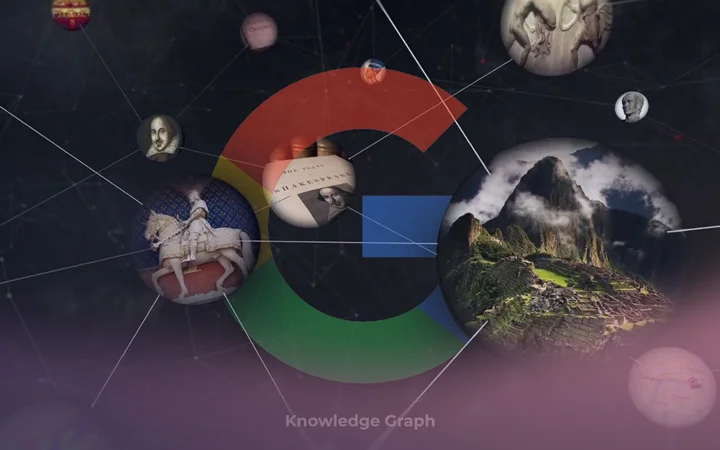
Semantics, entities, and the knowledge graph deepen the understanding of the motives of internet users.
This is what website optimisation truly is. We can’t possibly optimise content without having at least a basic understanding of what the visitor ‘wants’.
Google is deepening its understanding of the searcher’s ‘intent’. This creates an opportunity that marketing and SEO experts have to take advantage of, in order to adapt their work and follow the trends.
Semantics, entities, and the knowledge graph are increasing SEO relevance. This is a major change compared with optimisations driven only by keywords (classic SEO). This time, the new algorithms actually force us to consider people, and not (ro)bots.
Want to know more about this? Click on the following link for an interesting read about the ‘Google Knowledge Graph‘ by Dixon Jones.
What will you find out? How the knowledge graph works, what entities are, and how Google uses natural language processing to increase the scale, diversity, and completeness of information in the search network.
3. High-quality content is the future
Improve the speed and quality of your content and gain an edge over the competition.
MORE ISN’T ALWAYS BETTER, especially when it comes to content.
Both content marketing and strategy have to include (also) the ratio of quality to time. If you put too much time, effort, and attention into your content, but only publish once a month, you may be missing opportunities.
Check your competition. Are they more productive at creating content and, as a result, more visible than you? How much do they publish, and what is the quality and length of their content? Adjust your content accordingly, or make it better than the competition.
At the same time, we have to be aware of the critical importance of expertise, authoritativeness, and trustworthiness (E-A-T) in the content prepared.
In any case, it never makes sense to produce a large quantity of low-quality content.
Instead, look at where the possibilities for improvement are. The goal should be content that is as high in quality as possible, created quickly and at as large a scale as possible.
What kind of challenges are you facing in this regard?
4. Marketers have to ‘get ahead of’ consumer demand
The new trend is heading in the direction of understanding customers through real-time statistics.
Are you listening to your customers?
Let’s look at an example. A customer visits your shop and, through their interactions and opinions, ‘communicates’ their needs to you. And you, as the owners, adjust to them. As long as you manage to recognise their needs, of course.
This is exceptionally valuable data about your customers. Real-time overviews are, in the digital world, the closest to the ‘voice’ of your customers.
Are you managing to track them, and do you know how?
Through search queries, behaviour on the website or online shop, behaviour on social media, responses to email marketing, and so on, the consumer is communicating their wants, needs, and intentions to brands, also in real time.
If you don’t ‘listen’, analyse, and then react to the insights by adjusting, you are missing many opportunities. Above all, for connection, cooperation, and other changes that you can immediately adjust to the needs of your customers.
Are you already taking advantage of these opportunities?
5. Customers value a top-quality user experience
Never forget about the experience of your users.
Connecting digital experiences between the customer and the brand
In a recent piece of research, ‘The State of the Connected Customer’, Salesforce found that as many as 80% of customers feel that the experiences they have with a company are just as important as their products or services.
Customers expect that customer support will have access to their information, regardless of whether they are chatting with a support (ro)bot or talking to customer support on the phone.
They expect one interaction to continue where the other ended, that they won’t have to start over with every new engagement with the brand.
The study also found that 62% of customers say that their experience with one industry influences their expectations of other industries as well.
Industries that have been slower with their digital transformation, for example manufacturing, construction, and agriculture, are facing the major challenge of keeping up with retail, business services, and other fast-moving sectors.
To sum up, never forget about the experience of your users.
6. The flourishing of intelligent automation
Simple automation for reducing redundant (repetitive) tasks is no longer enough.
THE FUTURE OF DIGITAL is in intelligent automation
As experts in SEO and digital marketing, we are finding that the number of consumer interactions and touchpoints has grown exceptionally. The amount of data we have to analyse has exploded.
As a result, fields such as deep learning, machine learning, natural language processing, and robotic process automation (RPA) have found their way (into the workflow) of the world of digital marketing.
Intelligent automation means giving up the need to make every single decision.
It means empowering (ro)bots not only to act in pre-known (programmed) scenarios (if/then), but also to actually get to know every customer and get to know them in ways that we, as people, simply cannot do at such a large scale.
And it means enabling these (ro)bots to act in real time, when the customer is most receptive to tailored messages, content, offers, and recommendations.
And you, are you already using intelligent automation in your processes?
7. Privacy and personal data as a ‘gold mine’
The way personal data of users is treated in the future is key to success.
While Google plans to gradually phase out third-party cookies (e.g. Facebook), we, as digital experts, are working to build a strategy for a future without cookies.
Reducing cookies on websites or apps is becoming the main challenge.
Since ad targeting and behaviour analysis are expected to become ever more difficult, the value and importance of users’ (personal) data are completely clear. Personal data is becoming a ‘gold mine’.
What to do?
Plan how you will deal with the questions and concerns of your customers about their privacy, the storage of this data, and the sharing (with third parties).
Determine what value you can offer consumers in exchange for their data, and assess the impact this trend will have on your measurement and analytical processes.
Above all, your customers have to feel safe about how you treat their personal data.
How to use these digital trends?
All of these digital trends are guiding the work of brands. They influence where the marketing departments and agencies of companies will invest time, effort, and money. These trends don’t presuppose solutions that are the same for everyone. But it is important that you keep your eye on them.
What you can do is assess the potential impact of these trends on your marketing strategy and the company as a whole. Be agile in your approach to people, technology, and digital trends, while at the same time ready to respond to all the marketing situations that follow. That way, success won’t escape you.